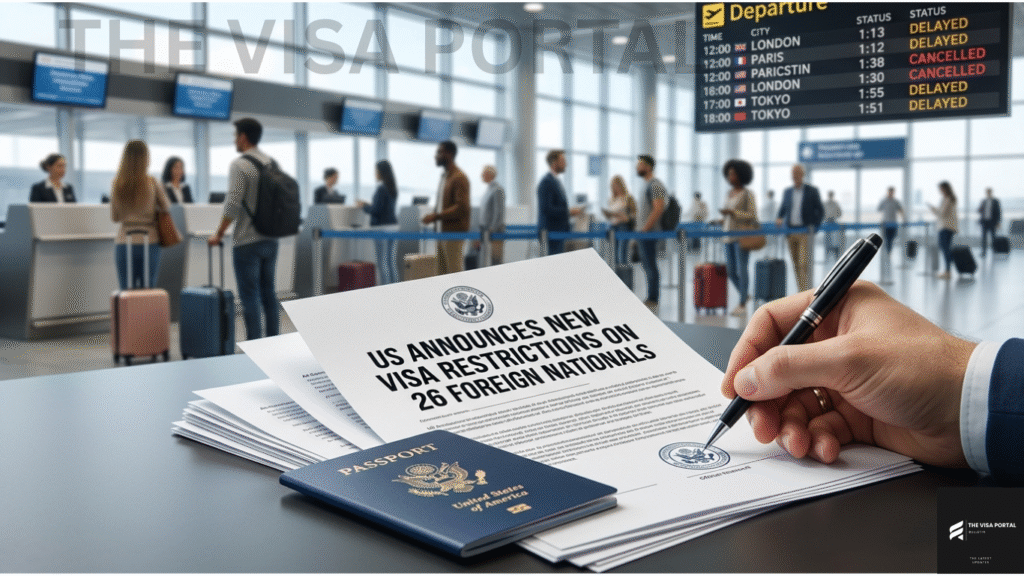
The United States has imposed a visa ban on 26 foreign nationals, which has caused controversy. These actions can influence diplomatic relations and set precedents for future US foreign policy strategies.
Washington has a habit of turning immigration restrictions into influence, especially when it comes to issues like human rights abuses, corruption, election meddling, breaking sanctions, or threats to national security.
Visa bans aren’t new, but every time they happen, they worry travellers, businesses, students, and relatives of those who are affected. A lot of people want to know if these changes only affect the people identified or if they will also affect other transport systems and people who want to apply in the future.
WHAT IS A US VISA BAN?
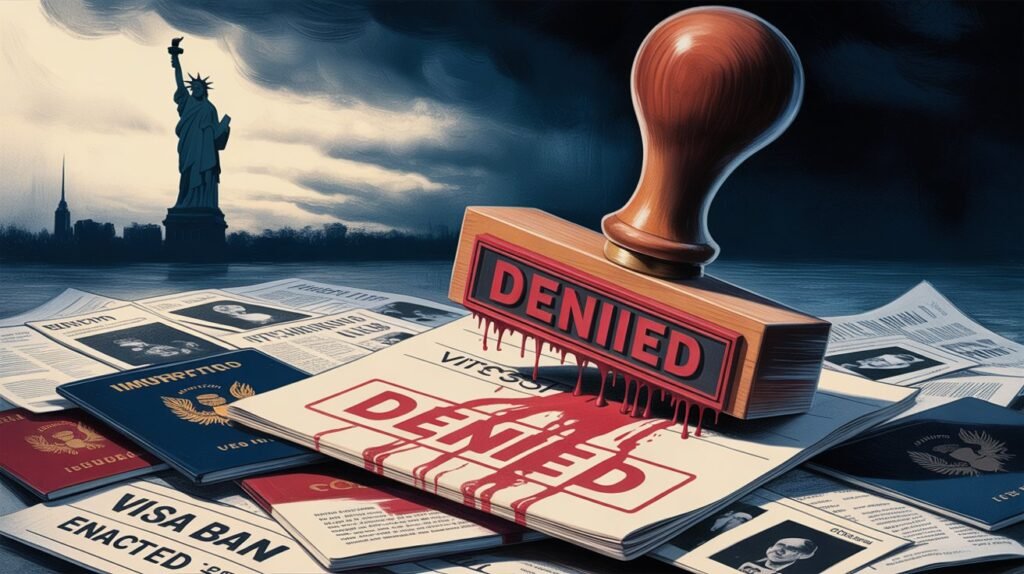
A US visa ban is a legal restriction that prevents specific foreign nationals from entering the United States or obtaining a US visa, highlighting its targeted nature and scope.
Such bans can result from US immigration laws, sanctions policies, or executive orders, highlighting the legal basis that helps the public understand their importance and fairness.
The US government often issues visa bans when it thinks people were involved in:
- Corruption or misuse of public funds
- Human rights violations
- Organized crime activities
- Undermining democratic institutions
- Security threats
- Sanctions evasion
- Violence or political repression
US EXPANDS VISA RESTRICTION POLICY
According to the State Department, the new framework clarifies policy for policymakers and regional stakeholders by giving the US greater power to keep out people who don’t meet certain criteria, such as backing hostile governments or businesses with ties to the US.
US officials say the targeted individuals planned, funded, or supported operations that put US interests in the Western Hemisphere at risk. Some of these attempts aim to control important resources, trade routes, regional infrastructure, or systems of sovereign government.
Washington is taking a more proactive approach to limiting foreign influence, emphasizing the vital role of policy actions in maintaining regional stability. Policymakers and other key regional stakeholders should recognize their role in fostering a collective commitment.
Immediate Family Members May Also Be Banned
The State Department confirmed that the visa restrictions may not apply only to the targeted individuals. Immediate family members of those targeted, including spouses and dependents, may also become ineligible for travel to the United States, depending on the circumstances and enforcement procedures.
This enforcement mechanism aims to bolster regional security by applying pressure on networks supporting foreign influence campaigns, reassuring international relations professionals that their ongoing efforts are essential in stabilizing the region.
WHY U.S TOOK THIS STEP
Officials stated that the new restrictions support several long-term national security goals, including:
- Protecting key trade routes and shipping access
- Preventing hostile control of strategic resources
- Securing critical infrastructure such as ports and transport systems
- Countering covert political influence operations
- Strengthening democratic institutions across the hemisphere
- Preserving regional stability and economic sovereignty
Washington has increasingly warned about what it calls hybrid threats, where adversarial powers use economic leverage, political influence, infrastructure deals, and covert support networks to expand strategic control.
26 FOREIGN NATIONALS TARGETED
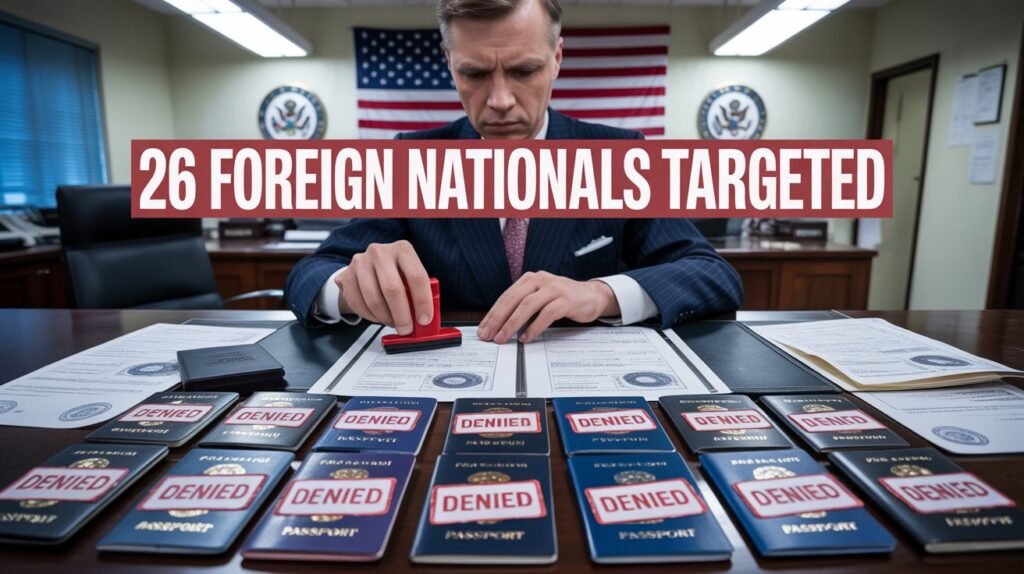
In the most recent move, the United States banned the visas of 26 foreign people who were allegedly involved in operations that benefited unfriendly nations or organisations that operated in the Western Hemisphere.
Officials stated the people are from other nations and are thought to be a part of larger foreign influence networks, even though they did not publicly reveal all identities in the initial announcement.
Authorities also issued a warning that if other infractions are found, there may be more visa restrictions and associated actions.
US ANNOUNCES STRONGER ENFORCEMENT STRATEGY
The State Department described the initiative as part of a long-term framework designed to reinforce US leadership in the region while protecting both domestic and allied interests.
Officials said the policy will be enforced using all available diplomatic and legal tools, signaling that Washington is prepared to take stronger action against those it believes undermine hemispheric security.
The US also emphasized that the restrictions are consistent with broader efforts to stop external actors from gaining control over assets considered vital to regional cooperation and security.
HOW THE NEW US VISA BAN AFFECTS TRAVELERS
In most cases, a targeted visa ban on named individuals does not automatically affect ordinary citizens from the same country.
Students, tourists, workers, and family-based applicants usually continue applying under normal visa procedures unless a broader country-wide restriction is separately announced.
However, secondary effects can include:
- Increased scrutiny for some applicants
- Longer administrative processing
- Additional background checks
- Diplomatic tension affecting future visa policy
FINAL THOUGHTS
The US’s decision to limit visas for 26 foreigners shows that people are more worried about foreign influence and geopolitical competition in the Western Hemisphere. Washington is sending a clear message that it wants to protect national security and regional stability by making it harder to enter and giving law enforcement greater power to do their jobs.
This policy expansion could be the start of bigger immigration and sanctions measures in the coming months, as officials have said that more moves may follow.