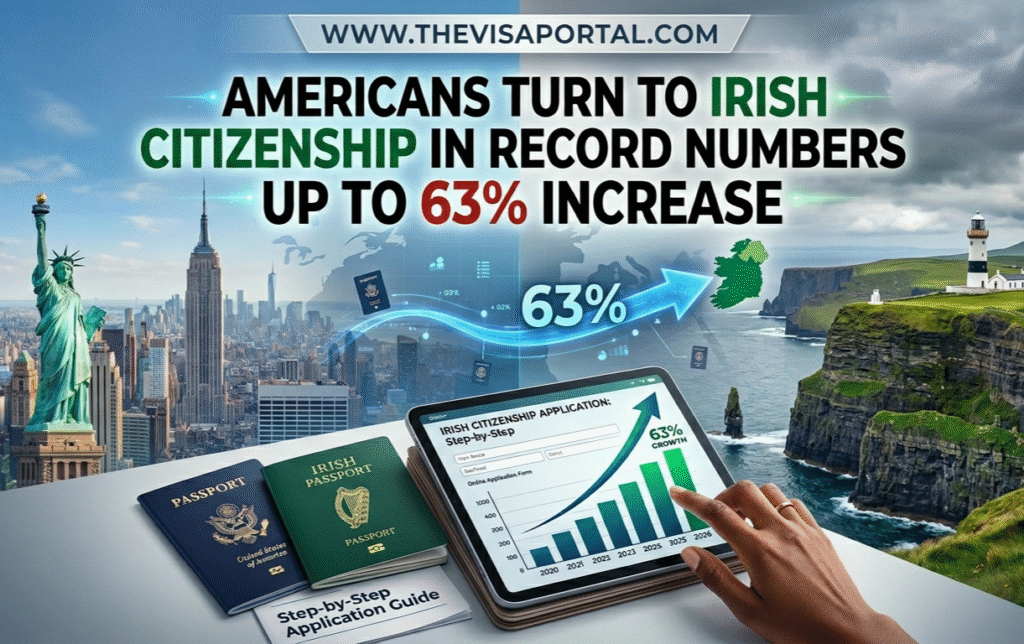
Over the past few years, many people in the U.S. have been interested in obtaining Irish citizenship.Americans turn to Irish citizenship in record numbers.
RECORD RISE IN CITIZENSHIP APPLICATIONS
Data recently released from the official source shows a huge rise in U.S. applications to Ireland’s Foreign Births Register (FBR), the route that permits those with Irish parents or grandparents to acquire citizenship. The number of applications jumped from 11,601 in 2024 to 18,910 in 2025, a year-on-year rise of 63% and the highest figure since digital records began in 2013.
However, Ireland is still processing a high number of applications. Approximately 40,250 citizenship certificates were granted in the same window, indicating that for the vast majority of applicants, once required documentation is provided applications are successfully processed. It also indicates that Ireland has improved its processing system to meet rising worldwide demand.
WHY ARE MORE AMERICANS APPLYING FOR IRISH CITIZENSHIP?
IRELAND’S APPEAL AS A SECOND CITIZENSHIP
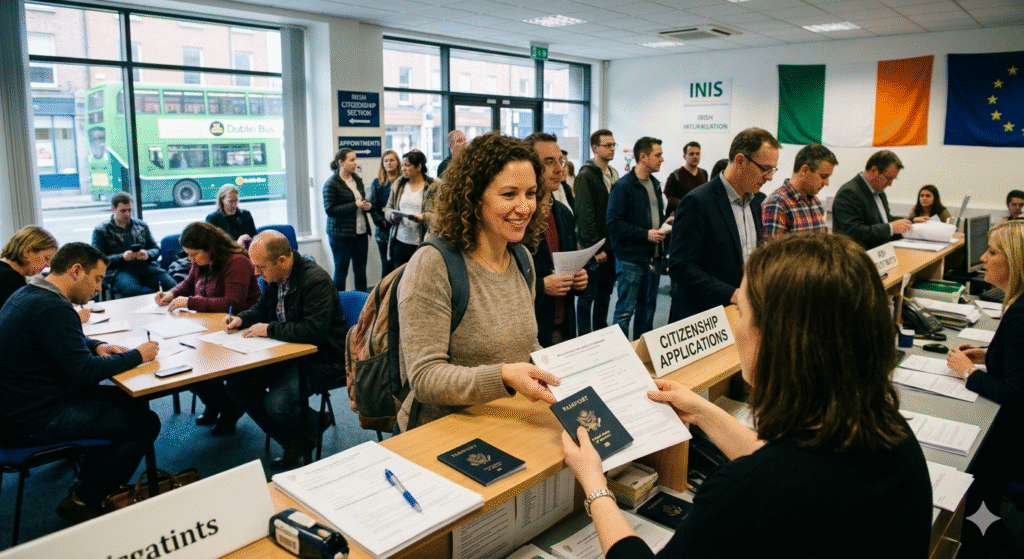
Ireland offers Americans second citizenship by heritage, granting EU benefits. Many seek citizenship for family connections and long-term advantages.
EU access allows Irish citizens to live, work, and travel freely across all 27 EU member states. Ireland is also attractive to foreign students due to its English language, strong economy, high quality of life, and the presence of global companies offering jobs.
People who are American can usually keep their U.S. passport and become Irish citizens, which is another reason why dual citizenship is sigAmerican citizens can usually keep their U.S. passport and gain Irish citizenship, making dual citizenship significant. Irish citizenship offers families access to education, health care, travel, and connections with Europe.
BROADER GLOBAL TREND IN CITIZENSHIP APPLICATIONS
Migration and Emerging Patterns
Alongside citizenship applications, actual movement is also rising:
- Around 9,600 Americans moved to Ireland in 2025, more than double the previous year.
- A small but growing number of U.S. citizens—94 applicants in 2025—sought asylum in Ireland, up from 22 the year before.
Experts suggest that political concerns, including issues around immigration enforcement and social policy, are contributing to these shifts.
IRELAND AS A STRATEGIC “PLAN B” DESTINATION

Ireland is becoming a popular second passport option for Americans because many people can apply through their Irish family background. It is also part of the European Union, which gives citizens extra travel, work, and living rights in Europe.
Experts say this trend may continue because more people want a backup plan in case of uncertainty in the world. They want a second citizenship for safety, freedom, and more opportunities.
Ireland is seen as a good choice because it has strong connections with people of Irish descent, access to European countries, and a stable government. This makes it a practical and reliable option for those thinking about dual citizenship.
Here is the source of the idea of this information.
FINAL THOUGHTS
The 63% surge in American applications for Irish citizenship reflects more than just a legal process—it signals a broader transformation in how people view identity, mobility, and security. With millions eligible through ancestry and growing global uncertainty, Ireland is increasingly seen as a gateway to Europe and a reliable “plan B” for U.S. citizens seeking flexibility in an evolving world.
FAQs (FREQUENTLY ASKED QUESTIONS)
1. Why are more Americans applying for Irish citizenship?
More Americans are applying due to Irish ancestry eligibility, rising interest in EU benefits, and a desire for a “Plan B” passport for greater global security and freedom.
2. What is meant by a “Plan B” passport?
A “Plan B” passport means having a second citizenship as a backup option for travel, work, or relocation in case of political or global uncertainty.
3. Is Irish citizenship only based on ancestry?
No, it can also be obtained through naturalisation, but most American applicants apply through Irish ancestry (parents or grandparents).